SCIENCE OF NMN - NAD+ Booster
Aging is associated with NAD+ (molecule essential for DNA repair & metabolic regulation) decline. To refill this decreasing NAD+, NMN has gained attention for its ability to boost NAD+, which further improves cellular health, promoting healthspan & quality of life.
Charu Kamboj (M.Sc. Food Science)
12/24/20254 min read

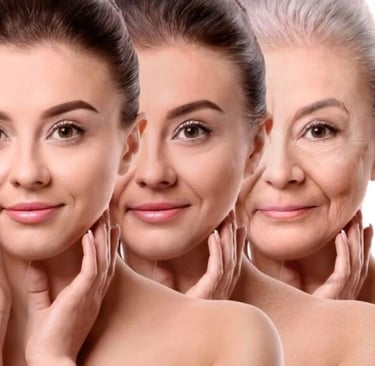
As the human life expectancy continues to increase worldwide, there is also a rapid increase in the elderly population. According to the World Health Organization (WHO), the global population aged 60 years and older will double, from about 1 billion in 2020 to more than 2.1 billion by 2050. By 2030, one in six people worldwide will be over the age of 60. This rapid demographic shift is driving growing demand for preventive strategies that support healthier aging, not just longer life.
Aging - A Medical Priority
In June of 2018, the World Health Organization (WHO) released the 11th edition of its International Classification of Diseases, and for the first time added aging. (Christopher Shade, PhD, 2020). The classification of aging as a disease paves the way for new research into novel therapeutics to delay or reverse age-related illnesses such as cancer, cardiovascular and metabolic disease, and neurodegeneration. (Mikhail V Blagosklonny, 2018).
Cellular Changes and NAD+ Decline
Aging doesn’t happen in one day; it happens in waves. López-Otín C et al. (2013) described, biological pathways are involved in the aging process. Among the most important are mTOR, which influences cell growth and protein synthesis, AMPK, the body’s nutrient sensor & Sirtuins, a family of proteins closely tied to DNA repair, metabolic balance, and longevity. All these rely on NAD+ - an essential molecule that supports cellular processes. Zhu XH et al. (2015) reported that by middle age, our NAD+ levels have declined to half that of our youth, leading to low energy, various metabolic disorders, and accelerated aging. To make it worse, a molecule called CD38 increases with age, consuming NAD+ that is already low. This leads to NAD+ decline, inviting a plethora of changes in the body like slow DNA repair, low vitality & energy, and making the body more prone to age-related metabolic disorders. These cellular changes highlight the importance of maintaining NAD+ availability has become a key focus in aging and longevity research.
NMN and Its Role in NAD⁺ Support
Nicotinamide mononucleotide (NMN) is gaining attention among biohackers and health enthusiasts as a potential longevity supplement that boosts NAD+ levels and supports cellular health.
Nicotinamide Mononucleotide (NMN) is a direct precursor to NAD⁺. It is synthesized from nicotinamide, an amide form of vitamin B3, and 5’-phosphoribosyl-pyrophosphate (PRPP) by nicotinamide phosphoribosyl transferase (NAMPT), showing anti-aging effects.
It is a naturally occurring molecule found in small amounts in foods such as broccoli, edamame, avocado, and cabbage.
Research by Caton PW et al. (2011) showed that NMN improved both the action and secretion of insulin in mice bred to be diabetic or obese & Yamamoto T. (2014) stated that NMN also protected the mouse heart from ischemia and/or reperfusion injury. Age-related muscle decline was addressed in studies by Mendelsohn et al. (2014), where NMN restored skeletal muscle in aged mice.
Preclinical studies have explored NMN’s effects across multiple biological systems. In a landmark study, Mills et al. (2016) demonstrated that oral administration of NMN can suppress age-associated weight gain, enhance energy metabolism and physical activity, improve insulin sensitivity, improve eye function, improve mitochondrial metabolism, and prevent age-linked changes in gene expression. The findings suggest that NMN can influence metabolic aging mechanisms.
Further research has also reported the neuroprotective effects of NMN. In a mouse model of Alzheimer’s disease, Wang et al. (2016) found that NMN supported neuron survival, cellular energy metabolism, and reduced oxidative stress, collectively contributing to slower cognitive decline. NMN is also shown to suppress inflammaging (inflammation-related aging)—since studies show it lowers adipose tissue inflammation associated with age. In fact, older mice appear to be more responsive to NMN, in comparison with young mice.
NMN Supplementation Clinical Trials
Irie J. et. al. (2020) evaluated the safety and bioavailability of NMN during their clinical trial with 10 healthy men who were administered 100, 250, and 500 mg of NMN orally. This non-blinded clinical trial assessed the NMN safety and noted that each NMN dose was well tolerated without adverse effects or fluctuations in heart rate, blood pressure, body temperature, and oxygen saturation.
A 2022 clinical trial by Okabe K. and colleagues examined the safety and effectiveness of NMN supplementation for increasing NAD⁺ levels in healthy adults. This placebo-controlled, randomized, double-blind study included 30 participants who took 250 mg of NMN daily for 12 weeks. Researchers monitored key health markers, and the results showed that oral NMN supplementation was safe and well-tolerated, with no side effects. In addition, participants experienced a significant increase in whole-blood NAD⁺ levels. These findings suggest that NMN supplementation may be a safe and effective way to support NAD⁺ production in humans. Lin Yi et. al (2023) conducted a dose-dependent, randomized controlled trial (NCT04823260) and showed that NMN supplementation significantly increased blood NAD⁺ concentrations and improved physical performance without safety concerns. The 600 mg daily dose produced the most consistent clinical benefits.
These studies highlight the potential role of NMN in healthy aging and cellular energy metabolism.
Conclusion
The rapid increase in the aging population is placing a strain on global healthcare systems, which creates the urgent need for effective strategies that support healthy aging and extend healthspan. While lifestyle interventions such as dietary changes, exercise, and fasting can help to improve longevity but they remain difficult to practice. That’s why evidence-based nutritional interventions are gaining attention as practical alternatives. Among these, the NMN-based supplement has emerged as a promising approach to healthy aging. NMN plays a key role in enhancing NAD⁺ metabolism and supports key biological processes associated with aging, including DNA repair, cellular function, autophagy, and metabolic regulation. Preclinical and clinical evidence suggest that NMN supplementation may help delay the onset of age-related disorders, making it a suitable candidate for anti-aging interventions in humans.
Innovations such as Young Fuel aim to replenish NAD⁺ through a research-backed & patented combination of NMN, antioxidants, and bioactive compounds that support energy levels, and overall healthy aging.
Scientific findings are further strengthening how targeted nutritional supplementation with NMN & other bioactives can support DNA repair & cellular function. Thereby, supporting longevity. Advanced formulation science and ingredient innovation enable more effective and accessible NMN-based solutions for long-term use. With a strong foundation in emerging clinical research and ongoing scientific validation, NMN-based formulations like Young Fuel represent a multi-functional approach to support healthy aging and improved quality of life in an increasingly aging population.